



















The Shiny Mirage of Progress
In the name of progress, India has embarked on projects that look magnificent on paper but carry hidden costs too grave to ignore. The Delhi-Katra North Express Highway, for instance, promises to cut travel time to eight hours, a dream for pilgrims and tourists alike. But behind this promise lies a disturbing reality- the sacrifice of mountains, forests, rivers, and fragile ecosystems. Development, when divorced from sustainability, becomes a shiny mirage: impressive from a distance, but dangerous when pursued blindly.
The Price of Mountains and Forests
The cost is borne by the mountains we carve, the trees we uproot and the fragile ecosystems we disturb. In many stretches of Jammu and Himachal, centuries-old trees have been felled in days, leaving behind naked hills vulnerable to landslides. Ironically, the six-lane road built only a few years ago was hardly utilised for more than five or six years before being bulldozed again for this grand expressway. What purpose does “development” serve if it means destroying what we have already built, along with nature’s blessings?
Nature’s Fury: A Warning Sign
Recent events remind us that nature does not forgive exploitation. The cloudbursts and flash floods in Kishwar and Kathua, the sinking land of Joshimath in Uttarakhand and the frequent landslides on the Jammu-Srinagar highway are not coincidences- they are nature’s response to unchecked human ambition. When we cut through fragile mountains and redirect rivers, we invite disaster to our own doorstep.
Relating to Everyday Life
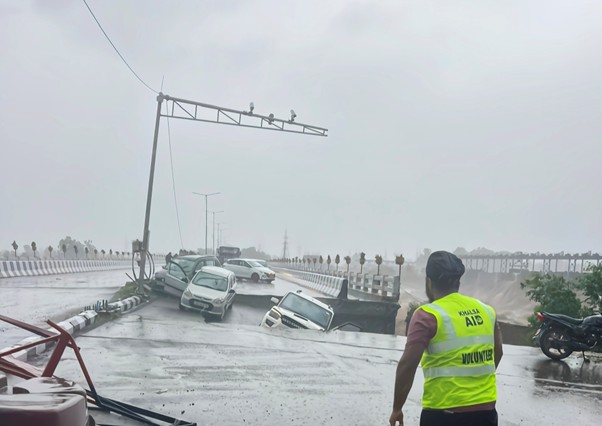
The irony is felt most by the common people. Farmers in Jammu and Himachal lose fertile soil to floods, shopkeepers see their markets wiped away after landslides and families travelling on modern highways get stranded for hours due to road collapses. Development was meant to ease life, but in reality, many citizens are paying with disrupted livelihoods and increasing insecurity.
The Need for Balance
Development should not come at the cost of destruction. True progress lies not in racing against nature but in moving forward with her. Countries like Bhutan have shown that sustainable development is possible, where roads are built carefully, forests are preserved, and the environment is treated as an asset, not an obstacle. India, with its fragile Himalayan belt, needs to adopt similar wisdom before it is too late.
Conclusion: Lessons for the Future
The choice before humankind is stark and urgent. We must learn that development without restraint is nothing but delayed destruction. The lessons are clear:
- Respect the mountains and rivers- they are not obstacles but lifelines.
- Plan projects sustainably- roads and infrastructure must serve generations and not just a political tenure.
- Adopt eco-friendly alternatives- tunnels, ropeways and smart public transport can reduce the burden on fragile terrains.
- Listen to nature’s warnings- cloudbursts, floods and land subsidence are not accidents; they are signals demanding course correction.
If we fail to learn now, the price will not just be lost forests or broken highways- it will be our survival itself. True development is not about reaching Katra faster; it is about ensuring that generations to come still have mountains to see, rivers to drink from and forests to walk in. Let us pause our blind race and choose a sustainable path, one where humanity walks with nature, not against it.
“Expressways may shorten journeys, but at the cost of mountains, rivers and forests. If we don’t pause our ambitious race, nature will pause it for us”