





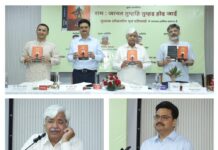












Chandigarh: Department of Community Medicine and School of
Public Health organised a Virtual meeting cum orientation workshop of
state and district level designated officers (DOs) of FDA/licensing
authority, food safety officers (FSOs) and vanaspati
producers/manufacturers. The meeting was aimed at sensitization and
implementation of <5% trans-fat regulation in oils/fats and food products.
The workshop was also technically supported by Strategic Institute for
Public Health Education and Research (SIPHER) along with Global
Health Advocacy Incubator (GHAI).
The meeting was also attended by other subject experts including Dr.
Poonam Khanna, Associate Professor of Nutrition, PGIMER Chandigarh;
Dr. Swati Bhardwaj, Nutrition Consultant, FSSAI; Mr. Ranjit Singh,
Advocate, Supreme Court of India; and Dr. Roopa Shivashankar,
Senior Consultant, Nutrition and Cardiovascular health, Vital Strategies.
Prof. Dr. Sonu Goel, Department of Community Medicine and School of
Public Health, PGIMER, Chandigarh; Dr Om Prakash Bera, Country
Coordinator, GHAI; and Dr Rakesh Gupta, President, SIPHER were the
key organisers of the event.
Outlining the background of the workshop, Dr Sonu Goel briefed the
participants that the ongoing workshop was organised under the project
titled Strengthening the Management of Hypertension Services through
Capacity Building, Media and Communication, and Stakeholder
Engagement in the state of Punjab. “Department of Community Medicine
and School of Public Health, PGIMER, Chandigarh in collaboration with
Strategic Institute for Public Health Education and Research (SIPHER),
Chandigarh and Global Health Advocacy Incubator (GHAI), USA have
been working to strengthen programme implementation of hypertension
services at state and district level for the past one year”, Dr Goel added.
“Trans-fats, also known as bad fats, have been proven as one of the
major risk factors for cardiovascular diseases worldwide. India is a
country with wide variation in food habits and trans fatty acids being the
dietary sources in fried food and snacks. In many parts of India,
hydrogenated oil in the form of Vanaspati is consumed in great quantity
which is known to have highest content of trans-fat,” said Dr Sonu Goel.
Dr Swati Bhardwaj underscored the Sampling Guidelines and
Procedures at different levels. She guided the present FSOs to record the
details regarding: Brand name, Name of the manufacturing unit, Batch
No., Type of fat/oil [Vanaspat/Margarine/Bakery shortening/ blended oil].
Speaking on Good global practices regarding Trans fats, Dr Roopa
Shivashankar noted that Trans fats are worst form of fats and are not
required by the body. “It leads to increase in bad cholesterol (LDL) and
decrease good cholesterol (HDL). The trans fats are also present in large
quantities in the industrially produced hydrogenated fats. The World
Health Organisation (WHO) has called for global elimination of industrial
trans fats by 2023; and India aims to eliminate trans-fat by 2022 at its
75th year of independence,” added Dr Shivashankar.
“Cohort studies have found statistically significant correlations between
TFA intake and weight gain or retention. Trans fats also cause a
redistribution of fat cells in the abdomen, increasing those cells, and
therefore increasing weight,” said Dr Poonam Khanna while speaking on
Trans fats and health. She further added that the weight gain associated
with 1% E from TFA would be around 0.45kg for a 65-kg woman over 8
years.
Listing down the current and proposed legislations towards eliminating
trans-fat in India, Mr. Ranjit Singh pressed for an Act to consolidate the
laws relating to food and to establish the Food Safety and Standards
Authority of India (FSSAI) for laying down science-based standards for
articles of food. He further raised the need to regulate their manufacture,
storage, distribution, sale and import to ensure availability of safe and
wholesome food for human consumption.
The meeting was then followed by a query session involving all
stakeholders (Dos, FSOs, producers/manufacturers) moderated by Dr.
Om Prakash Bera.
Mirror 365 - NEWS THAT MATTERSDear Friends, Mirror365 launches new logo animation for its web identity. Please view, LIKE and share. Best Regards www.mirror365.com
Posted by Surinder Verma on Wednesday, June 17, 2020