


















STICHED WITH PRIDE, WORN WITH HONOUR- WHY CAMOUFLAGE UNIFORM DESERVES BADGES AGAIN
Article By- Naisha Singh
A soldier’s uniform is far more than just an attire, it is a powerful emblem of national strength and military resolve. Choosing a life where danger is a constant companion demands extraordinary courage. But the purpose is so grand that no amount of risk deters the youths from joining the armed forces. And the badges and patches earned during each tour of duty narrate the saga of valour to the one beholding the uniform. For hundreds of years, soldiers from all over the world have worn coat of arms, emblems, crests on their attire which eventually evolved into badges and patches on their uniforms as testimony of their bravery, skill, loyalty, and affiliations that could not be broken even in toughest times. These markings are more than just decorations; it is their unique identity earned while serving the motherland in the most challenging locale beyond ordinary imagination.
The Indian Army may have decided to make their camouflage or commonly called combat uniform without badges, patches, and insignias because they needed to be consistent, maintain operational security and secrecy; or just being utilitarian and practical. But this has taken away a key part of what it means to be a soldier who is an institution in his own right, and the military history he draws his inspiration from. I interacted with various serving as well as veteran soldiers who unanimously believe that putting badges, patches, and insignias back on Indian Army camouflage uniforms, either in black and green or in a camouflage pattern like rest of modern militaries across the globe would reinstate its glory while keeping with operational necessities. However, Indian Navy and Indian Air Force continue to wear their colourful badges and patches till date who may as well like to consider the idea of changing them into the suggested pattern, if they like it. Because of their distinct training, extreme hard work, personal sacrifices, and achievements on the battlefield and in life, every soldier’s path is different. Badges and patches show what happened on their journey. When you leap out of an aircraft in the sky, you test your nerves, skills, and confidence. And that lands you with the coveted Para Wings. The Balidan and commando badges indicate how tough the soldier is. His sense of pride and faith in his training further boosts him to make impossible possible. Badges of qualification show that a soldier is an expert in a certain area, such as shooting, mountain or jungle warfare, combat diving and like or has had a stint in a specialist unit. Without these, every soldier seems like a shadow with no face, and you cannot tell who they are or how hard they worked to get there. By divesting the uniform of these milestones, seemingly the success stories have been removed along with, said a veteran soldier.
Recognition: The Key to Motivating the Military
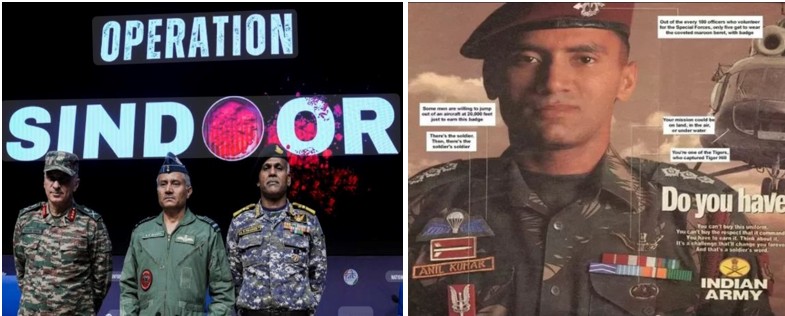
One of the best ways to inspire individuals to work hard is to compliment them. But in the military, it is even more important because there is always a danger. Badges and patches signify that a soldier has volunteered, worked hard, done what they were told, and is good at what they do. To encourage the spirit of volunteer-ship, competitiveness, and camaraderie as a token of recognition to set them apart as the ones who have worked extra hard, these markings act as justified acknowledgement for those soldiers while acting as a source of motivation for the posterity. As a case in point, during one of the Indian Army’s outreach programs on OP Sindoor recently in a college, one of the students during informal interactions highlighted that the army camouflage uniform looked more inspiring with its erstwhile badges and patches on it. Rightly, they stay on a soldier’s uniform for their whole career, but the words of thanks for the act only last for a brief time.
Esprit De Corps: The Secret Armour
When soldiers fight, they do not simply fight for the flag; they also fight for the person next to them. People feel like they are part of a group when they wear regimental insignias. This is very important for creating a sense of camaraderie and oneness. A soldier’s regimental marking on their shoulders or crest on the headgear or flag on their sleeves is a reminder that they are on the same mission being part of the same country, same army, and the very same fighting unit. There are no longer any outward markers of any shared history of sacrifice and victories which binds them together during the most testing times, contrarily, it has gone missing from the very uniform that needed them the most. A serving officer said, removal of such recognitions earned with hard work and dedication affects the psyche adversely against the spirit of volunteerism; no matter how much one denies it but the pride associated with the appearance of the uniform has inadvertently got undermined.
Inspiration for the Present and Future Generations
For a long time, the best way to get people to join the army has been to witness a soldier who has been honored. Kids think they did something when they see a uniform with badges on it, vindicated by the advertisements e.g. the famous print ad “Do you have it in you” – a picture of courage, skill, discipline, and respect. A class 12 student said, “one would still get respect if one wears basic camouflage clothes, but perhaps not as much as if he/she wears a uniform with meaningful badges and patches; it makes us curious to know the story.”
Fixing Operational Security (OPSEC) Problems
One reason to take away badges is that they can give out personal information about a soldier’s unit or area of speciality. But operational security and visual symbols can still work together like done in most of the other modern armies actively involved in wars and/ or military operations world over. You can do these things: Badges, patches, insignias, and flag with Velcro backs that you can take off when you need to. Generic Combat Identifiers: Using colors for these markings including flag that do not stand out, like green and black, or colors that blend in with the uniform fabric. Rules for the mission: In exceptional situations, commanders may tell people to take them off, which can be done easily as was being done before. This focused approach keeps with the nuances of operational security yet retaining the strength of those badges, patches, insignias, and flag.
The Aesthetic Argument: Function Meets Tradition
For a lot of soldiers, putting on their uniform is like putting on an armour. Badges and patches are part of that armour, though they do not block bullets the same way. It makes the uniform look more honourable, adequately glamorous yet optimally tactical, the one that means business.
Restoring The Uniform’s Silent Power
The Indian soldier’s journey is full of unwavering dedication, huge sacrifices, and incredible skill. Their uniform should tell the story of their journey, not simply with the hues of camouflage but also with the symbols of all the hard work they have done. They are like letters in a language that both soldiers and civilians can read. Putting them back on in black and green or camouflage designs would help us remember what our warriors did. Give each soldier the credit for their hard work and competence. Make sure the next generation is as inspired as ever and does well. Soldier’s pride, morale, and motivation are undeniably linked to nam, namak and nishan– the badges, patches, insignias, and the flag are just as important to winning as any weapon. There is no story about a uniform that does not have them. Let us tell those stories again. Let our warriors show their pride, talent, and heritage where it belongs- on their shoulders and sleeves, over their hearts, and across their chests.