


















INDIA’S 1ST ADVANCED VASCULAR INTERVENTIONAL AND ANIMAL RESEARCH FACILITY WITH BIPLANE INAUGURATED BY PROF. JAGAT RAM, DIRECTOR, PGIMER
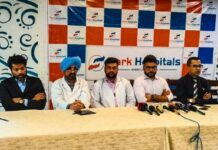
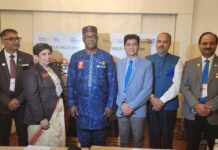
Prof. Jagat Ram, Director, PGIMER on April 20th, 2021 inaugurated India’s 1st Advanced Vascular Interventional and Animal Research facility which is equipped with a Biplane DSA. Shri Kumar Gaurav Dhawan (IRS DY Director, Administration), Shri Kumar Abhay (IAAS Financial Advisor) also graced the occasion.
The Department of Radiodiagnosis and Imaging at the PGI, Chandigarh has installed this first-ever Biplane Digital Subtraction Angiography (DSA) the facility in the country dedicated for basic research in small animals. This facility will aim at testing new drugs and hardware that can potentially be used for the treatment of human disorders stated Prof. Dr. M.S. Sandhu, Head, Deptt. of Radiodiagnosis at PGI. He said this is one of the biggest and best equipped Radiodiagnosis Department in the country.
The DSA machine is a sophisticated digital X-ray emitting machine, which helps in the precise evaluation of vessels inside the human or animal body once iodine based contrast is injected into the specific vessel through thin tubes called catheters which are placed inside that vessel, and it gives an exquisite display of the vascular system of that particular organ and the blood flow pattern Interventional radiologists use this machine for doing angiography of various organs of the body like the brain, liver, kidneys, and also of the extremities. The various treatments that the interventional radiologists can do is opening up of blocked vessels, plugging of leaking vessels and delivering super selectively the chemotherapy or the radiation to the tumor in the affected organ stated Prof. Paramjeet Singh.
Before coming into market for human use, all the drugs and allied equipment have to undergo strict checks initially in animal models followed by human trials in various phases. Currently, due to the lack of appropriate testing facilities for newer devices aimed at Interventional treatment of disorders in India, almost all of these certifications are done in the United States, Europe and East-Asian countries. This often involves delay in treatment coming to Indian shores and is significantly expensive due to high import duties. With the setting up of this laboratory, there is a chance that these limitations may be superseded for some new drugs and equipments stated Prof. Ajay Kumar who was instrumental in setting up this new Research facility at PGI.
The procedure for starting research experiments involves clearance of the experimental study by the Institute Animal Ethics Committee, which approves it after detailed deliberation about the expected results and risks to the animals. Thereafter, these animals are subjected to angiographies on the DSA to map the vessels. Subsequent administration of experimental drugs is undertaken or deployment of new devices is carried out like stents, coils, etc to understand the changes these lead to in the animals. The results subsequently achieved aid to develop specific therapies for various vascular and parenchymal disorders in human beings. The animals on which Research is done at PGIMER include Sheep, Rabbits, Guinea Pigs, Mice, Rats, Hamsters, stated Prof. Naveen Kalra.
Areas where animal DSA may prove useful is in devising minimally invasive interventional treatment of primary and secondary liver and renal tumors, peripheral arterial disease and for treatment of vascular disorders of the lungs and abdomen. Newer anticancer drugs, the safety of which is not known, can be angiographically injected in specific organs of the animals and the response can be assessed thereafter. The animal DSA facility will help the Institute and Department to set high standards in patient care through concurrent testing of various novel treatments by angiographic means, reiterated Prof M.S.Sandhu.
This dedicated DSA Animal Laboratory will also give the opportunity to the Interventional Radiologists to collaborate with other researchers inside and outside the Institute and even at an International level. It will thus greatly open up the scope for doing multidisciplinary and multi centric research projects at PGI said Prof. Mandeep Kang.
Some other diseases that this system can be of potential help is management of neurological disorders like acute stroke, carotid stenosis, intracranial aneurysms, arteriovenous malformations, carotico-cavernous fistulae stated Dr. Sameer Vyas and Dr. Chirag Ahuja.
With this facility in PGI our institute will be taking active participation for Preclinical trials and standardization of interventional hardware. This will also promote the Government’s “Make in India” drive. Many projects of various departments at PGI need X-Rays of animals, which can also be done on this DSA machine, said Prof. Ajay Kumar.